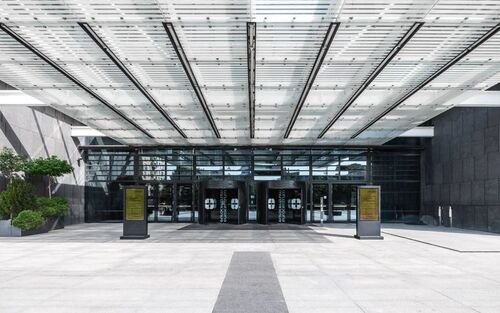
Finding the right office space is one of the most consequential decisions a business can make. The location, quality and configuration of your workspace directly affects employee satisfaction, operational efficiency, client perceptions and long-term costs. In Warsaw – a city that has grown into one of Central Europe’s most important commercial centres – the range of available office spaces is broad, the standards are high and the market is competitive. Whether you are setting up a new operation, relocating an existing team or expanding your footprint in Poland, this guide will help you navigate the Warsaw office market with confidence.
Understanding the Warsaw Office Market
Warsaw’s office market is one of the largest and most liquid in Central and Eastern Europe. The city’s total stock of modern office space runs into several million square metres, spread across multiple business districts and a diverse range of building types and grades. New supply continues to enter the market, with developers responding to sustained demand from both domestic companies and international occupiers establishing or expanding their Polish operations.
Professional office spaces in Warsaw are available across a wide range of sizes – from compact suites suitable for small teams to entire floors and multi-floor occupancies for large organisations. The market caters to virtually every type of business, from technology startups and professional services firms to financial institutions and multinational corporate headquarters.
Types of Office Space Available in Warsaw
The Warsaw office market offers several distinct categories of workspace, each suited to different business needs and growth stages.
Traditional leased office space in Grade A or Grade B buildings remains the dominant model for established businesses. The tenant leases a defined area for a fixed term – typically three to five years for smaller spaces, five to ten years for larger occupancies – and fits out the space according to their own requirements. This model provides the highest degree of control over the working environment and the strongest platform for creating a branded, distinctive workplace.
Serviced offices and managed workspaces offer an alternative for businesses that prioritise flexibility over customisation. These fully equipped, ready-to-use spaces are available on monthly or quarterly contracts, eliminating the need for fit-out investment and providing access to shared amenities such as reception services, meeting rooms and communal areas. They are particularly well suited to new market entrants, project teams and rapidly growing businesses with uncertain headcount projections.
Coworking spaces have grown significantly in Warsaw over recent years, offering desk-based membership options for individuals and small teams alongside private office suites for larger groups. The collaborative atmosphere and networking opportunities of coworking environments appeal particularly to startups, freelancers and businesses in creative or technology sectors.
Key Factors in Choosing Office Space in Warsaw
With such a wide range of options available, narrowing down the choice of office space requires a clear framework of evaluation criteria. The most important factors to consider include the following.
Location and accessibility should be assessed from multiple perspectives – proximity to public transport links for employees commuting from across the city, accessibility for clients and business visitors, and the availability of parking for those travelling by car. Warsaw’s metro system, tram network and extensive bus routes provide good coverage across the city’s main business districts, but the quality of connections varies significantly between locations.
Space specification and technical infrastructure are critical for businesses with specific operational requirements. Floor plate efficiency – the ratio of usable to gross floor area – affects how many workstations and meeting spaces can be accommodated within a given area. Power capacity, connectivity redundancy and cooling capacity are particularly important for technology-intensive operations.
Lease flexibility has become an increasingly important consideration following the widespread adoption of hybrid working models. Businesses are understandably cautious about committing to long-term obligations for space that may not be fully utilised under new patterns of work. Landlords who offer options to expand or contract the leased area during the lease term, or who provide break clauses at defined intervals, offer a meaningful advantage over those with more rigid lease structures.
Sustainability and Wellbeing in Warsaw’s Office Buildings
Environmental credentials and employee wellbeing have moved from nice-to-have features to core requirements for many corporate occupiers. Large organisations with formal ESG commitments increasingly require their office buildings to hold recognised environmental certifications – LEED, BREEAM or the newer WELL standard, which focuses specifically on the health and wellbeing dimensions of the built environment.
Warsaw’s best office buildings now routinely achieve high ratings under these certification schemes, incorporating features such as:
- high-efficiency building systems reducing energy and water consumption
- enhanced indoor air quality through advanced ventilation and filtration
- biophilic design elements including living walls, natural materials and abundant planting
- active travel infrastructure with secure bicycle storage, shower and changing facilities
- outdoor terraces and green spaces providing access to fresh air and natural light
Negotiating Your Office Lease in Warsaw
The commercial terms of an office lease in Warsaw are typically negotiable, and the outcome of negotiations can significantly affect the overall cost and flexibility of the occupation. Key areas for negotiation include the base rent, service charge cap, rent-free period, fit-out contribution, lease term and break options.
Market conditions at the time of negotiation will influence the balance of bargaining power between landlord and tenant. In periods of higher vacancy, tenants can typically secure more favourable terms – larger fit-out contributions, longer rent-free periods and greater flexibility in lease structure. Engaging an experienced tenant representative can make a meaningful difference to the outcome of negotiations.
CPiPG offers a portfolio of modern Grade A office spaces in Warsaw and other major Polish cities, providing flexible lease terms and comprehensive property management services designed to meet the needs of international and domestic occupiers alike.